arid
Status: During employment as an architect & researcher at ITE TUBS.
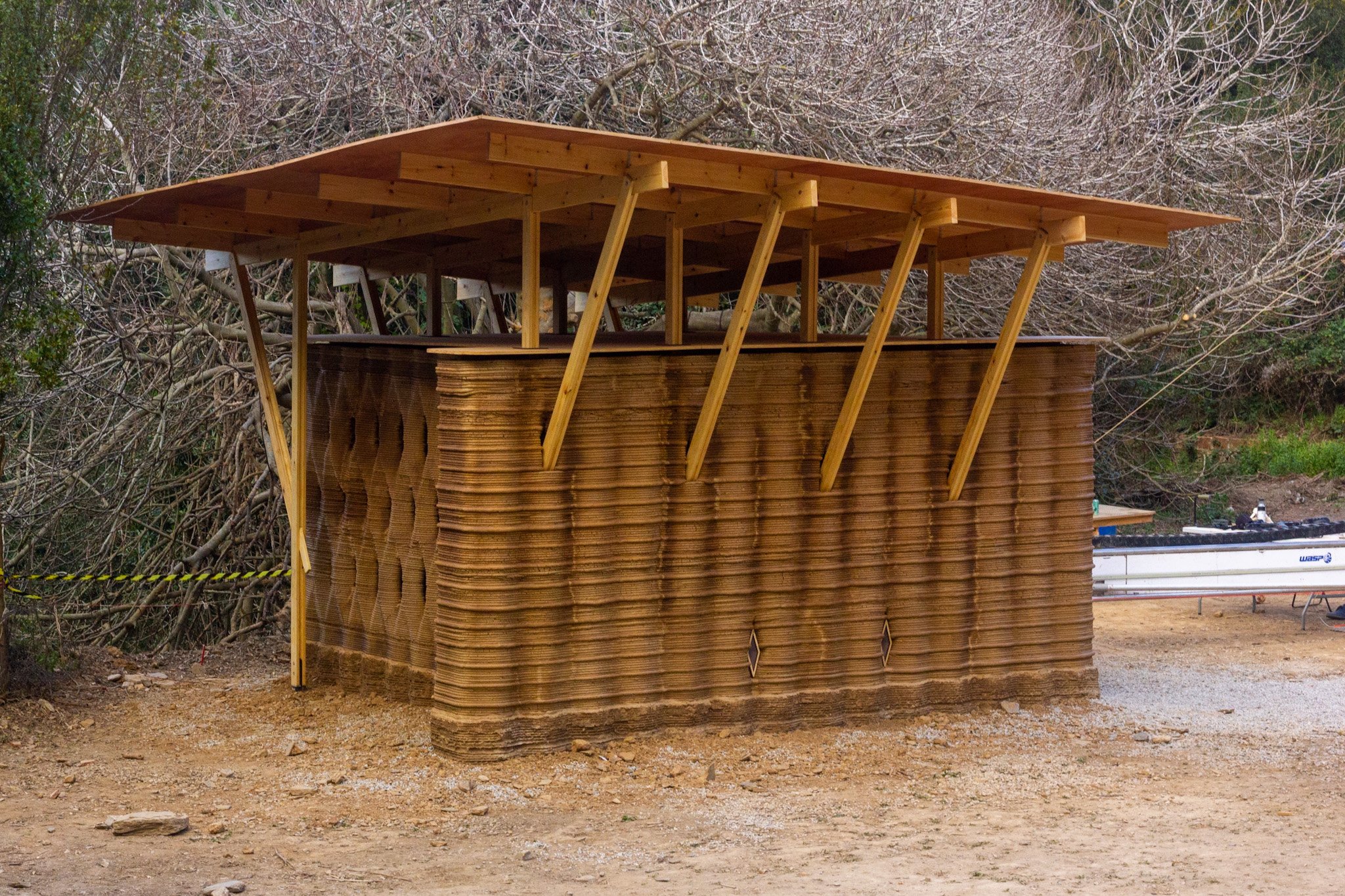
Project: Arid living prototype is the first earth-based 3d printed living structure in spain.
Location: Barcelona, Spain.
Type:
Research & development.
Team: WASP 3d
Objective
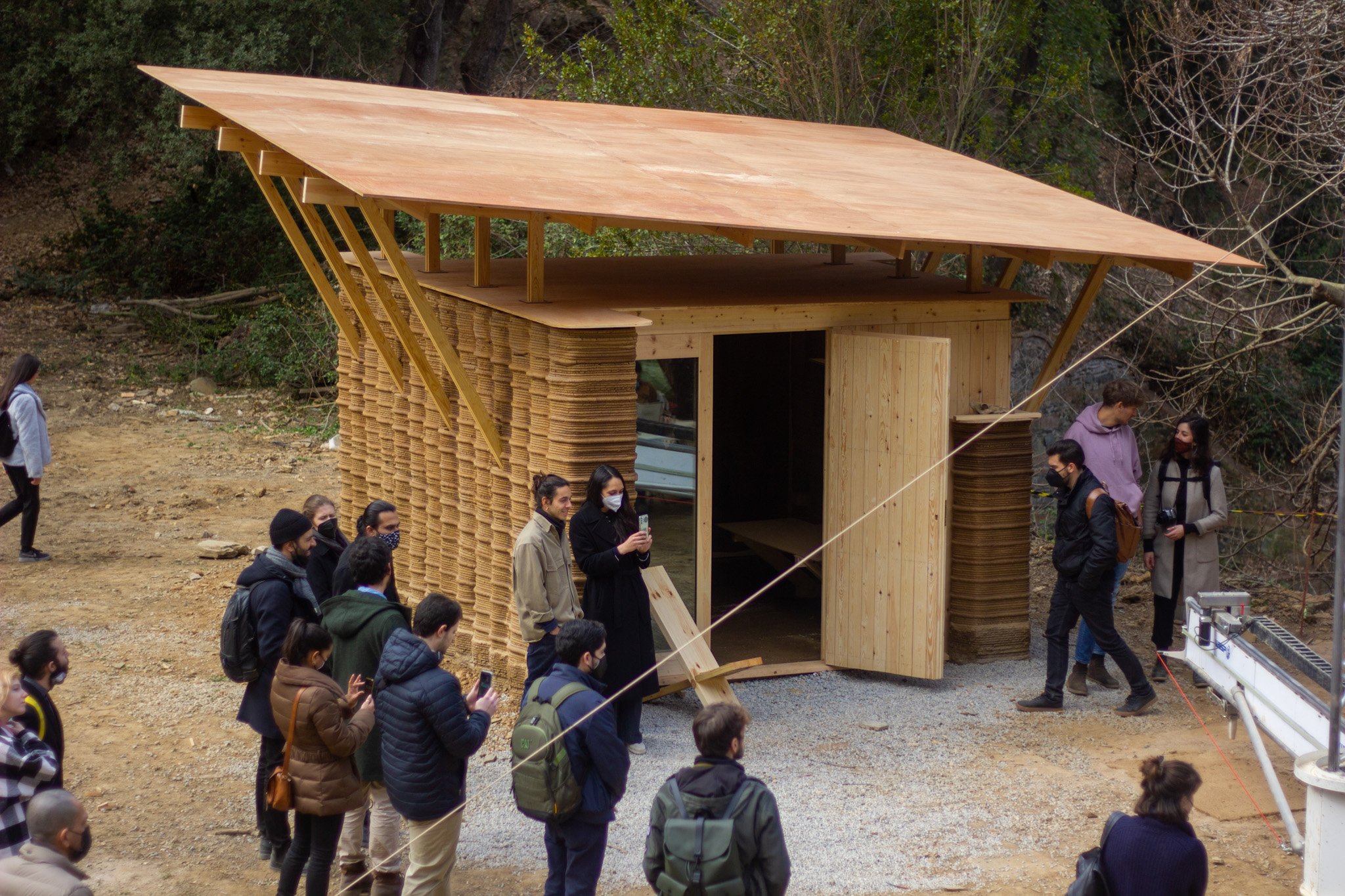
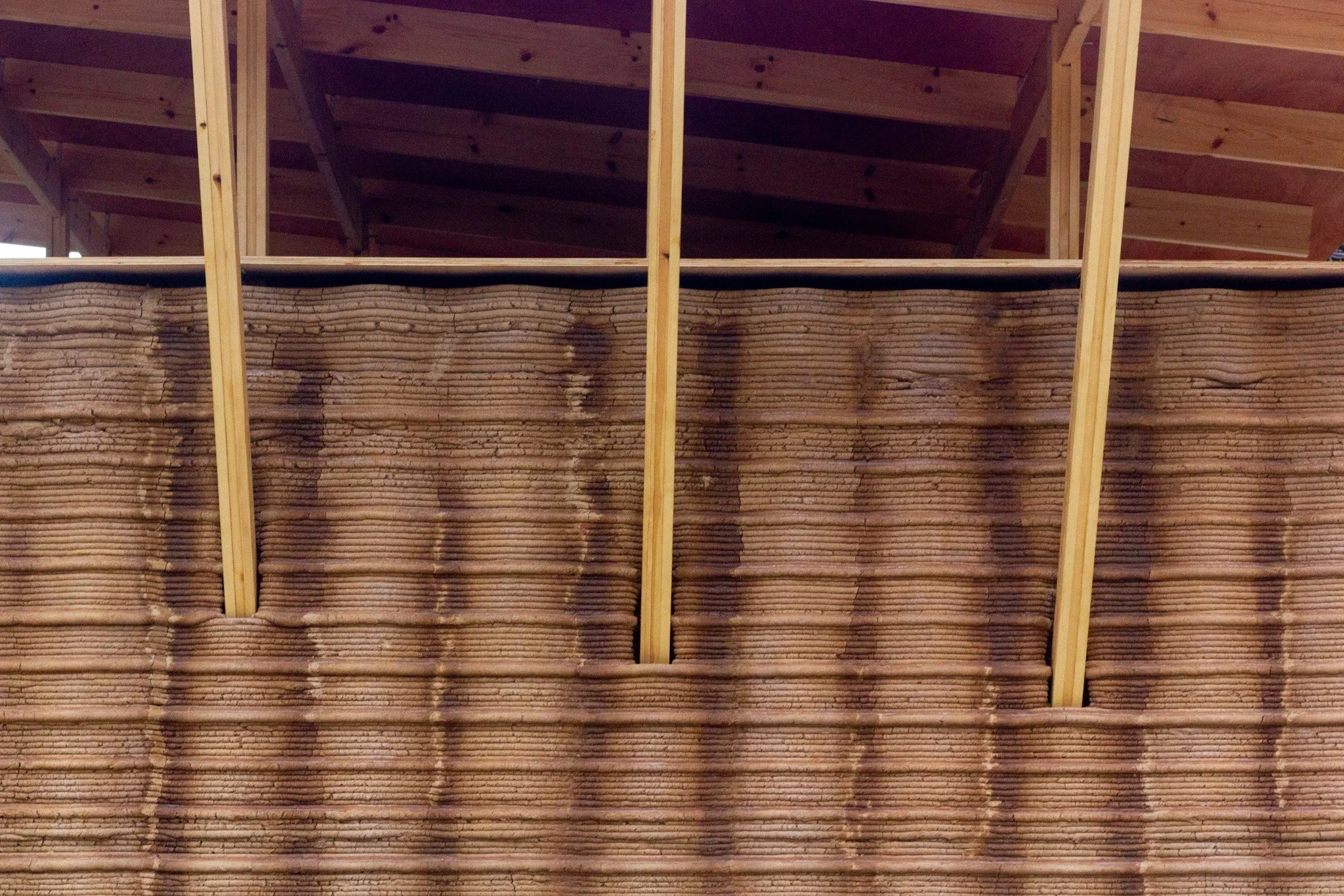
The objective of the project was the collective design and construction of a living prototype of an earthen 3d printed enclosed room, covered by a timber roof and sealed against the elements. Students participated in workshops and a brief design charette, synthesizing the work done in the research period. The result was a series of structural prototypes, and a collectively designed living prototype, all of which were printed 1:1 at Valldaura.
Site Brief
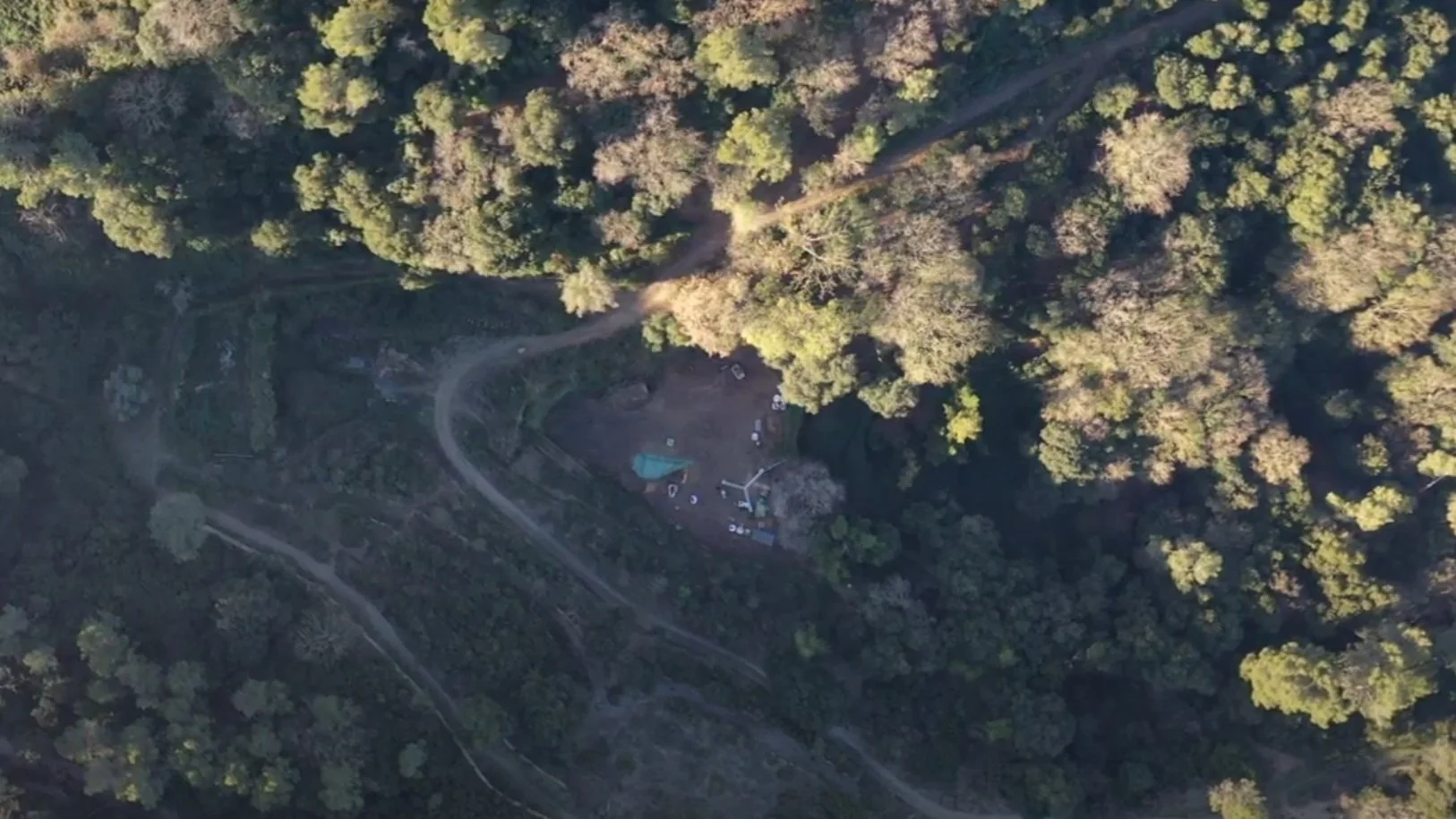
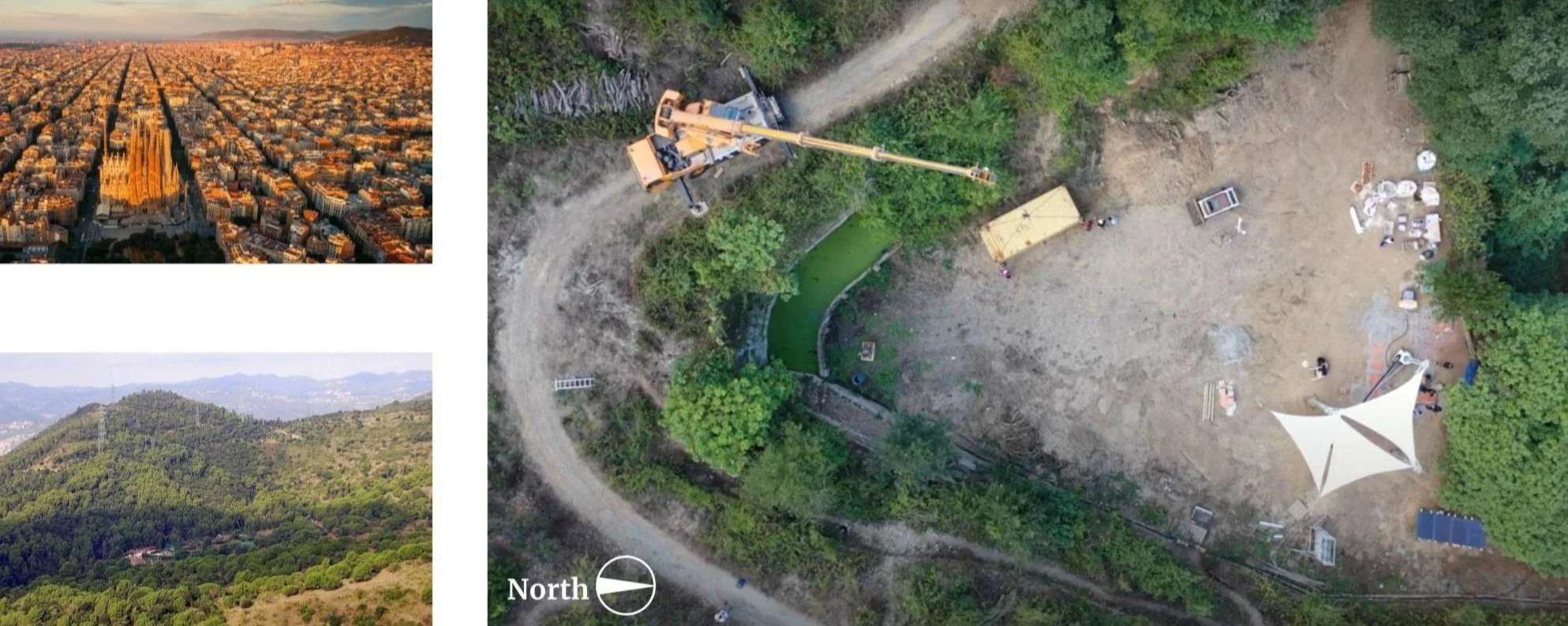
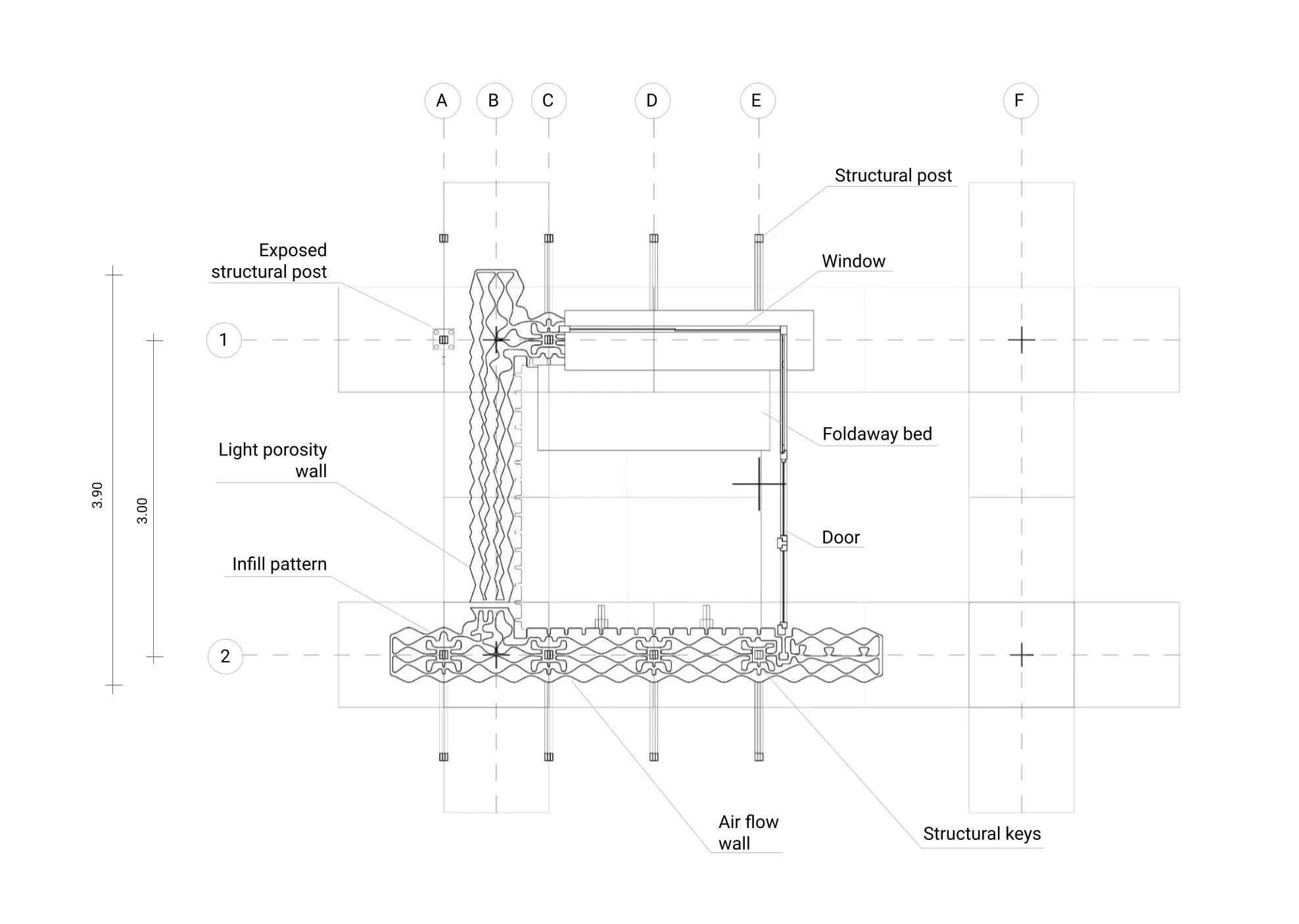
The chosen site is in Valldaura, within walking distance of the Valldaura Labs. This location was selected mainly to be able to use the earth from the site as the main element in the material mixture to build the prototype. We are able to use the natural water available on site without having to bring in an external source of water supply. The site is big enough to allow us to add modules in the future. And by using the wasp crane, we are also able to grow the network of machines and prototypes by using the structure that is already in place. For the foundation, we are using gabion walls that maximize the use of the crane’s printing radius. It also has a limited impact to the site and allows for drainage.
Factors
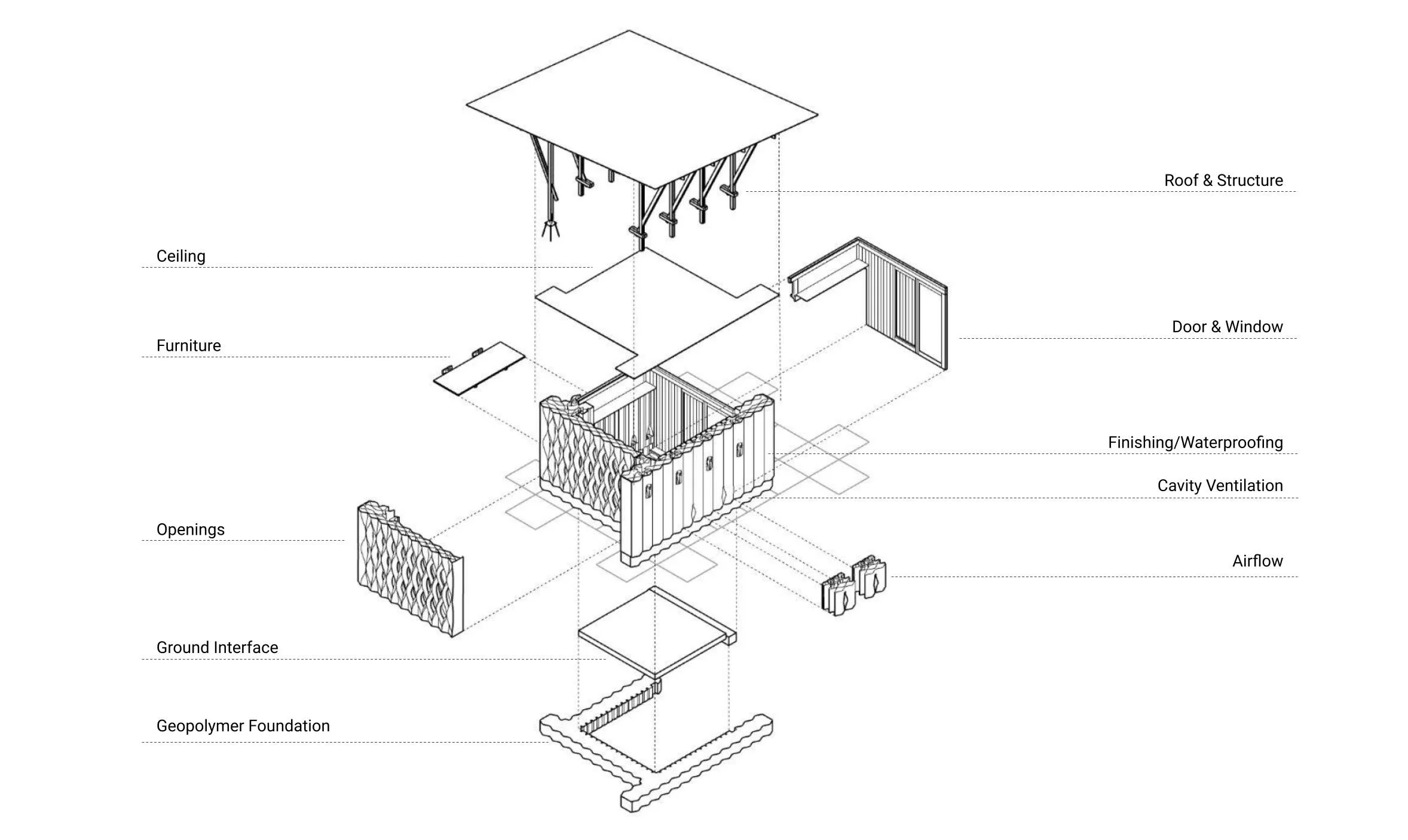
The factors influencing the schematic design of the living prototype include, but are not limited to, materiality,
climate, structure, site conditions, printer radius and location, the existing gabion foundations in place, and occupancy activities. The proposed layout of the scheme
will need to accommodate both the additional structure of the roof, as well as the innate structure of the clay walls. The project aims to build a sustainable, km-zero robotically printed earthen building, with earth from the site itself.
Sustainabilty
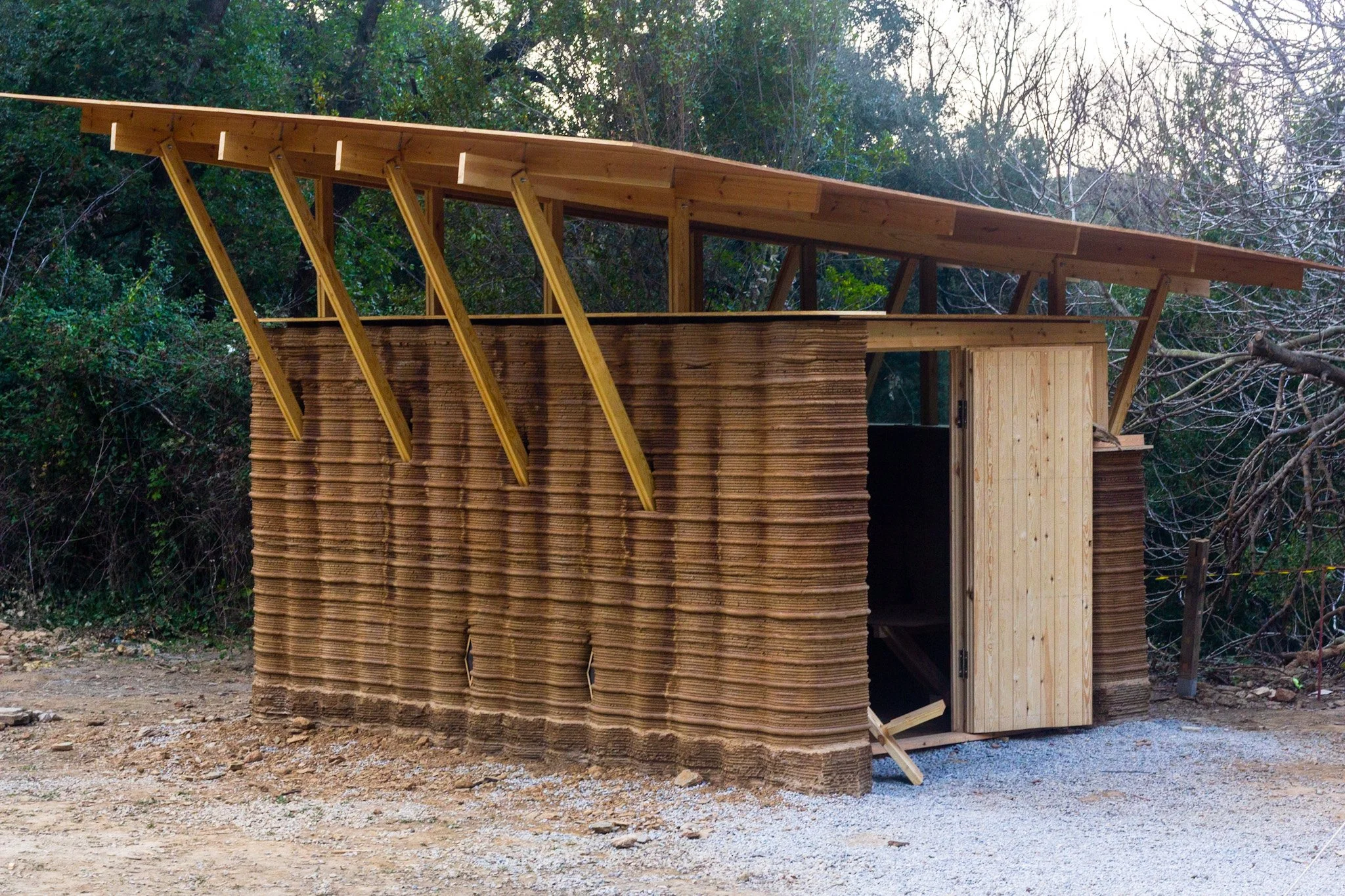
3dPA research aims at achieving a sustainable and structurally stable construction system using km-0 robotic additive manufacturing. In the first prints of prototypes in Valldaurain,3DPA this cycle of 3dPA, a mixture of industrial clay, transported from the city, was used. However, due to km-0 aspirations, for the final prototype, earth was extracted from the site itself, left to dry for a month, and later processed on site itself to be suitable for printing.
Foundation
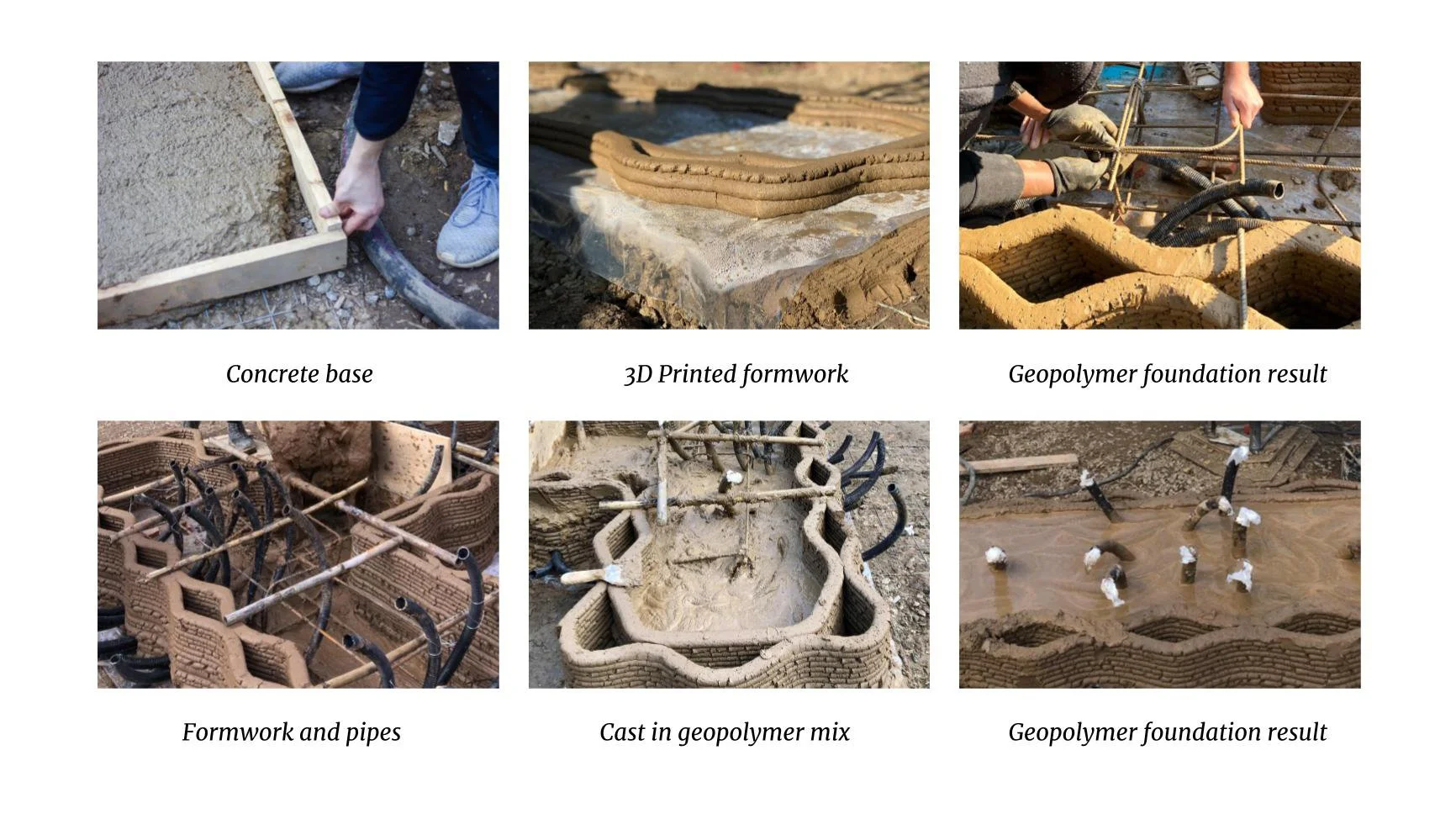
Based on research conducted during the design charette, the decision was taken to print on top of a geopolymer base, with an incorporated detail that could ventilate the walls to improve the shrinkage of the material during the drying period. A waterproofing layer was laid down, on which a formwork was printed on top of. Rebar was set intos the formwork, as were ventilation tubes, before geopolymer was cast into the form. After the geopolymer had set, the outer layers were kept on for a few days until they were eventually removed by hand.
Ventilation
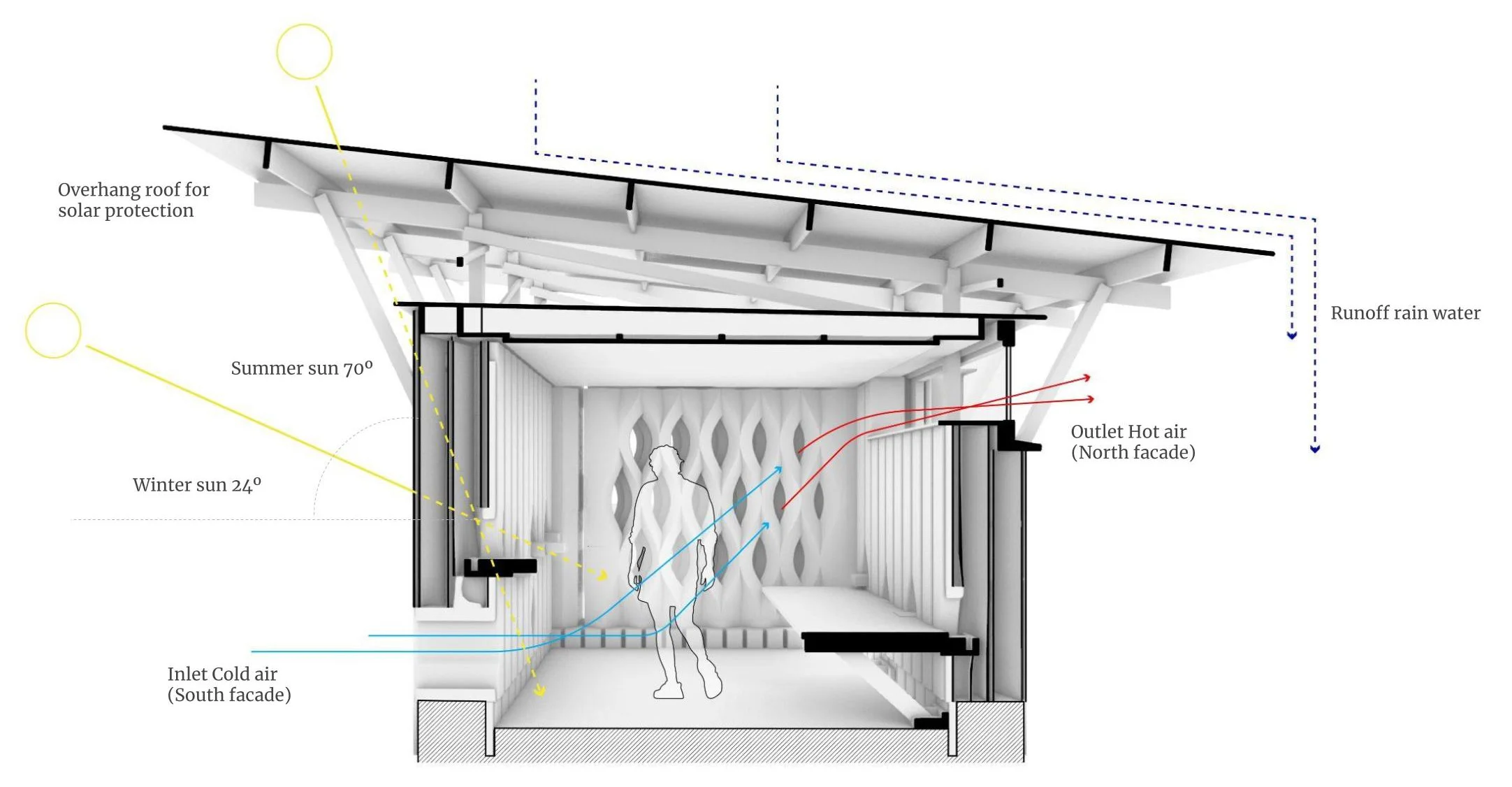
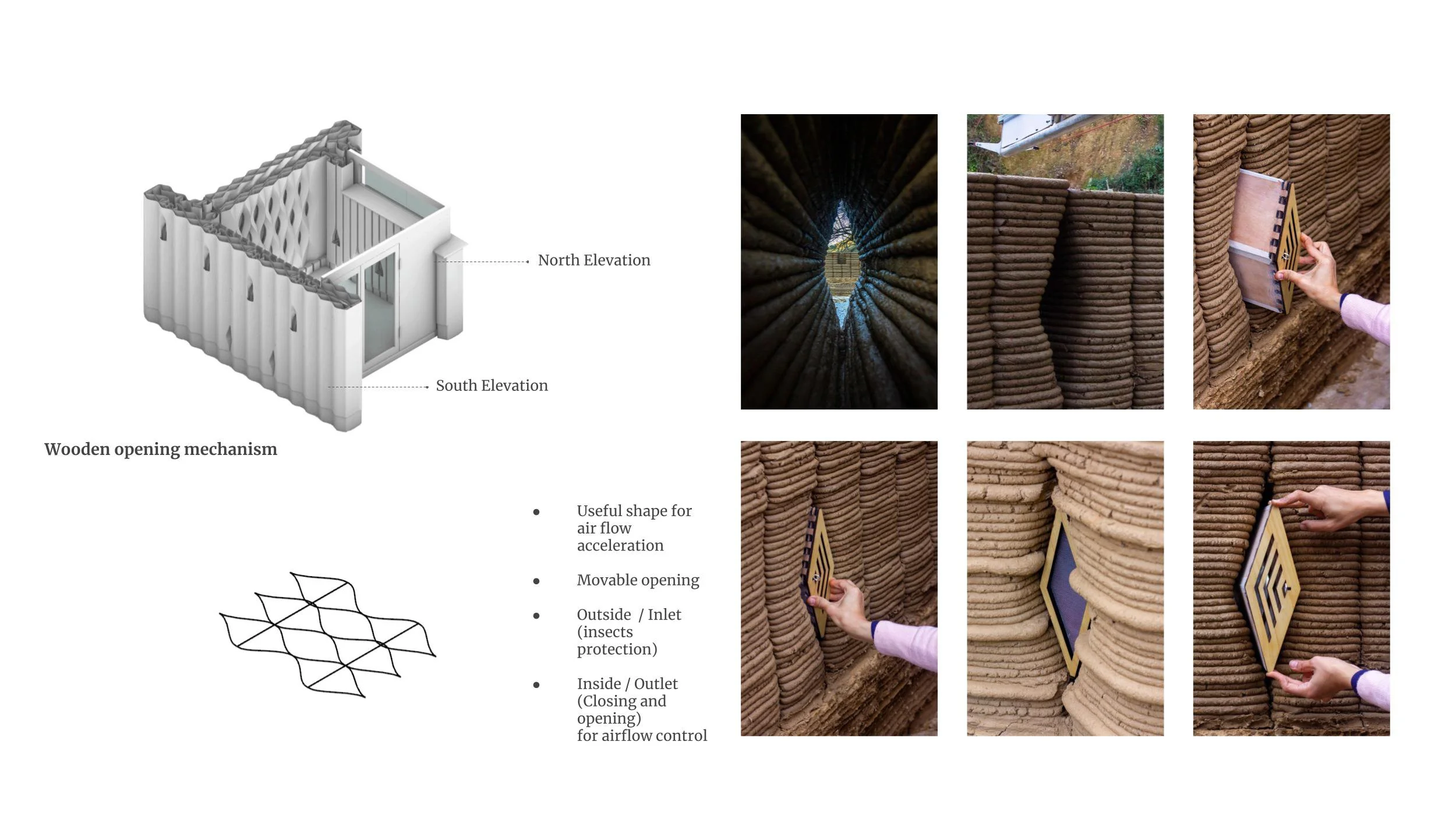
The research looked at designing 3D printed clay void wall to control and channel the airflow. The design is inspired by the methods used traditionally for air capture in the hot arid climate. The design criteria focus on the relationship between velocity and airflow pattern. This is achieved by exploring the geometrical parameters that control airflow from outside to inside the space. The parameters of wall elements to be studied include surface openings, orientation, surface pattern, and air cavity shape.
Light
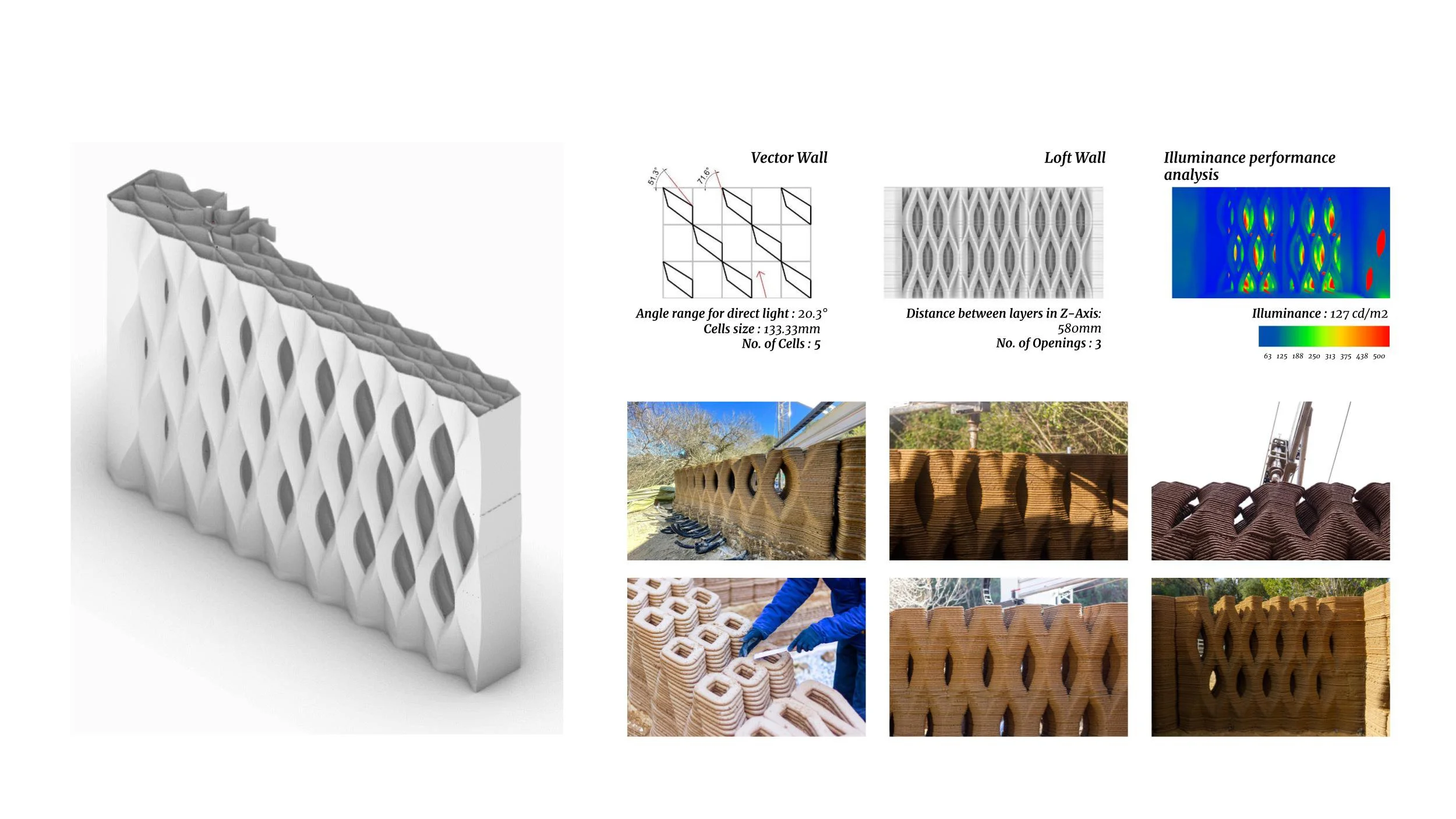
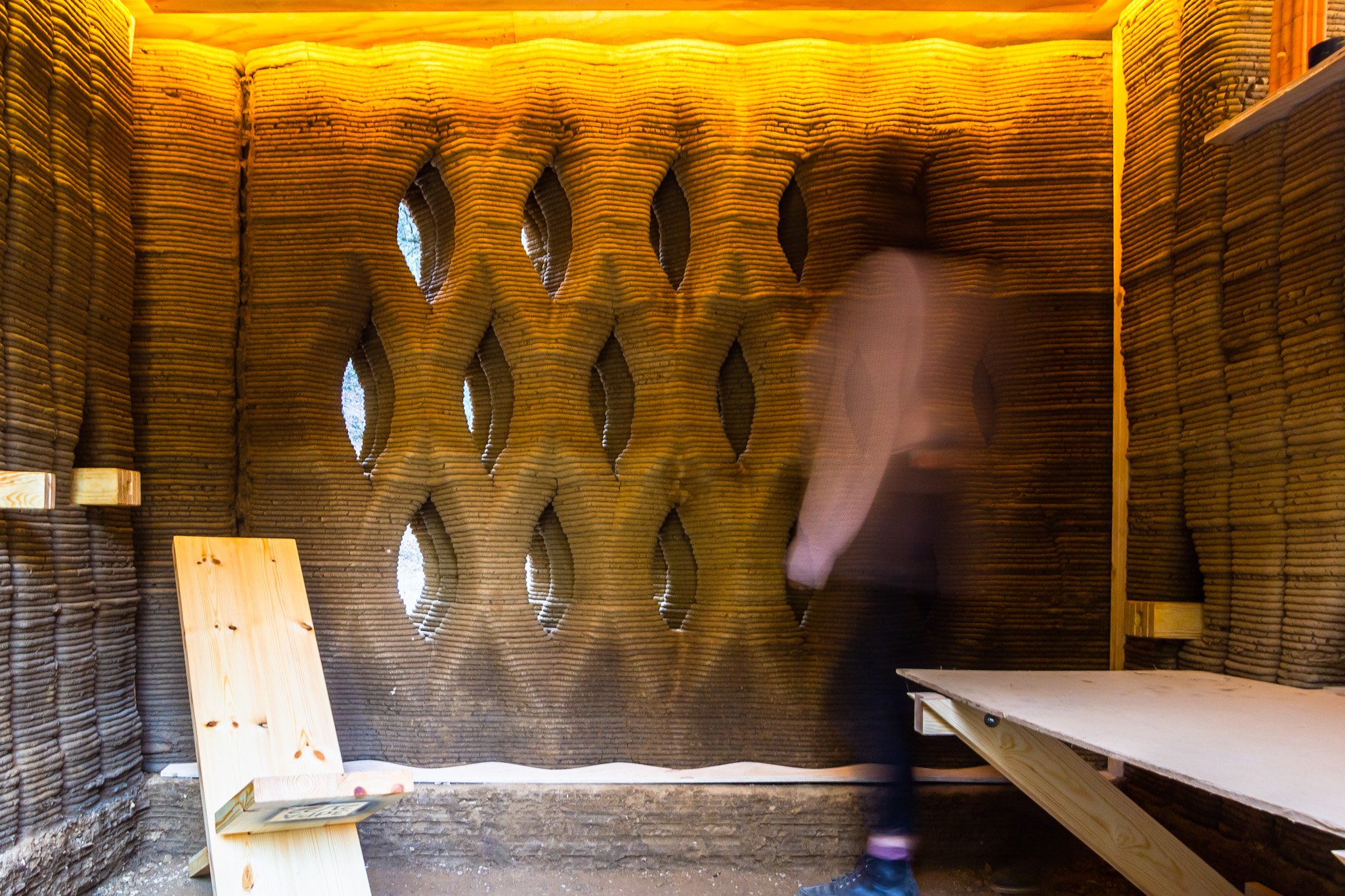
3D printing showcases its strength in the ability to manipulate geometries, yielding a variety of shapes and forms. Key to consider in the production of this infinite range of forms is the variable driving the form’s geometries (in this case a light vector) and the density of material required in giving rise to the geometries.
This research is aimed at an exploration of geometries that allow for the least material density and the most diffused light quality, being the most comfortable range of light in an indoor environment. By utilizing a specific geometry, openings were parametrically designed along the west facade.
Details
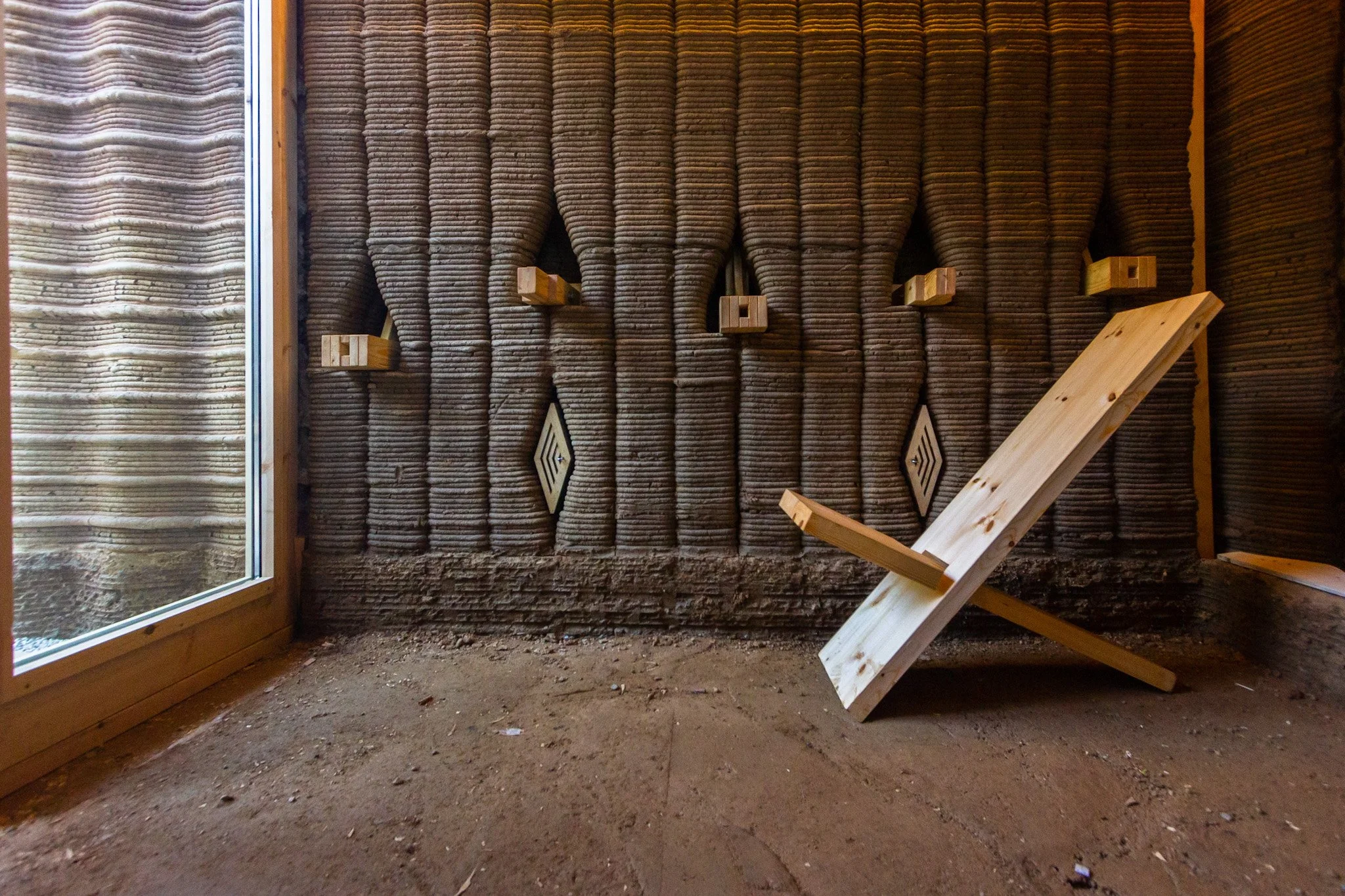
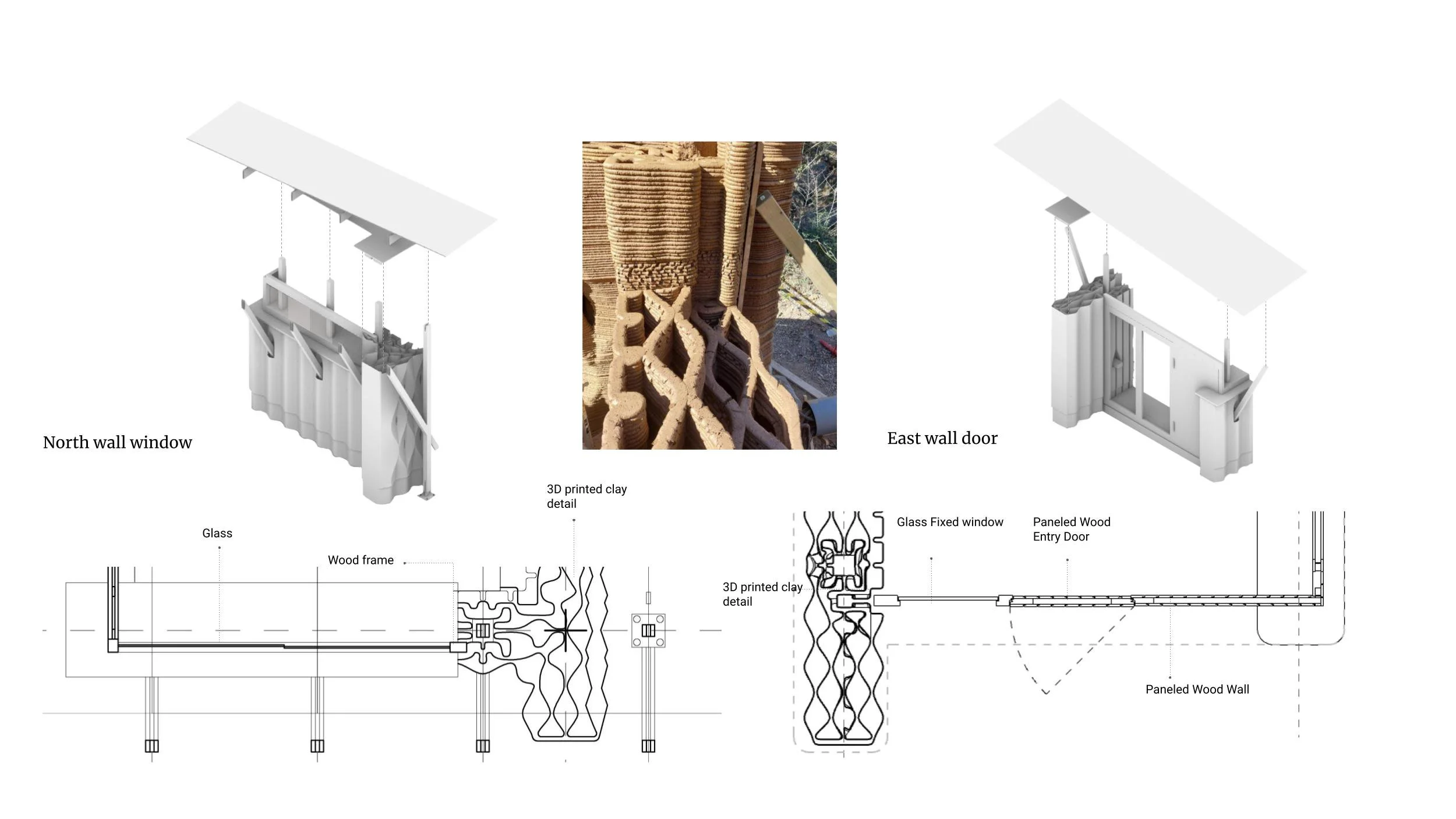
Generating a good connection between a wall and an enclosure can be the key to achieving climatic comfort inside a house, despite weather changes. Taking this into consideration, the research looked at different alternatives for the wooden connections between the dwelling enclosures such as a roof, windows, doors, and the 3D-printed clay wall, aiming to accomplish an improvement in heat conduction and increase the climate comfort. This resulted in a variety of clay and wood connection details for the door and window.
Roof Structure
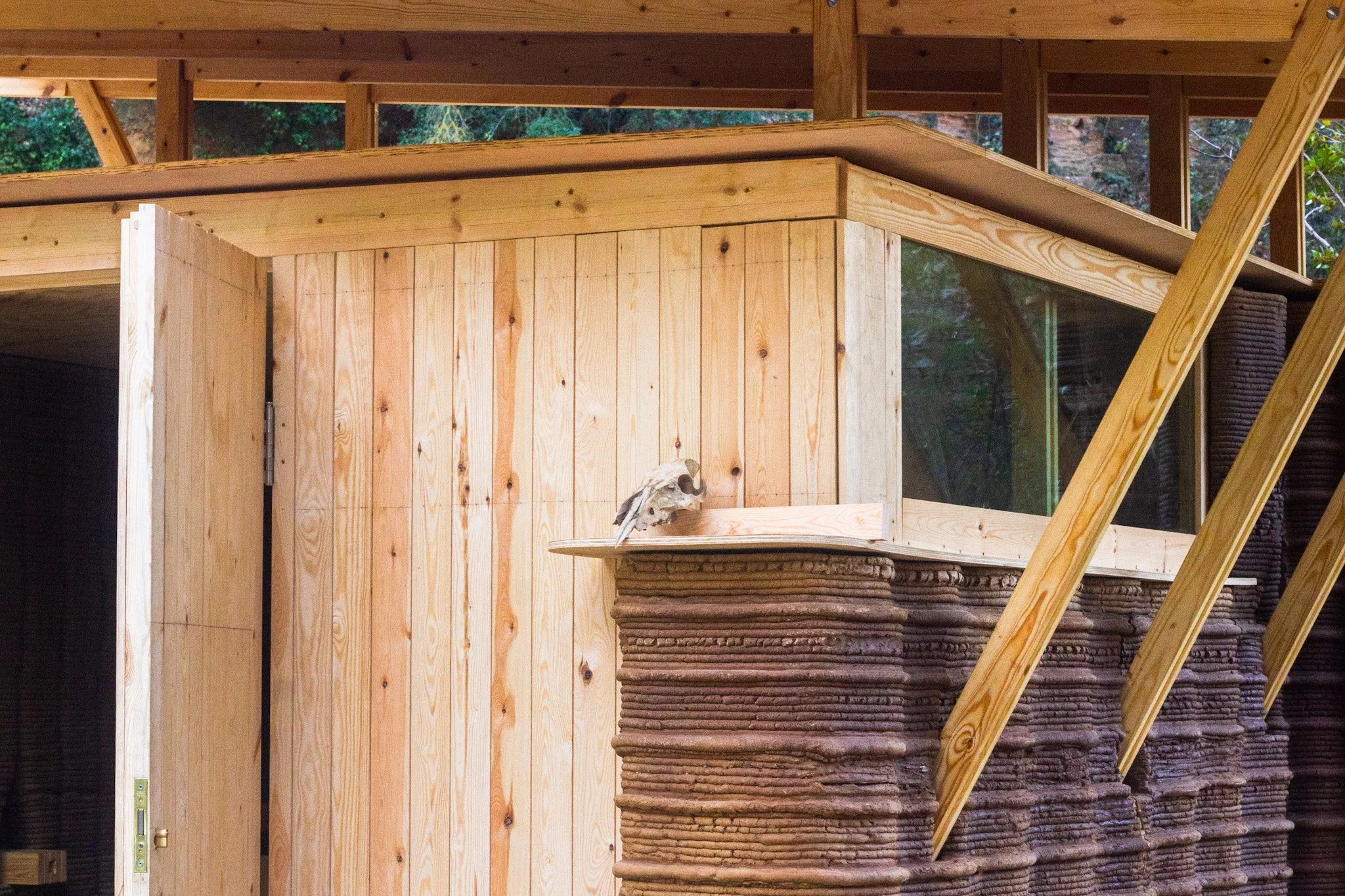
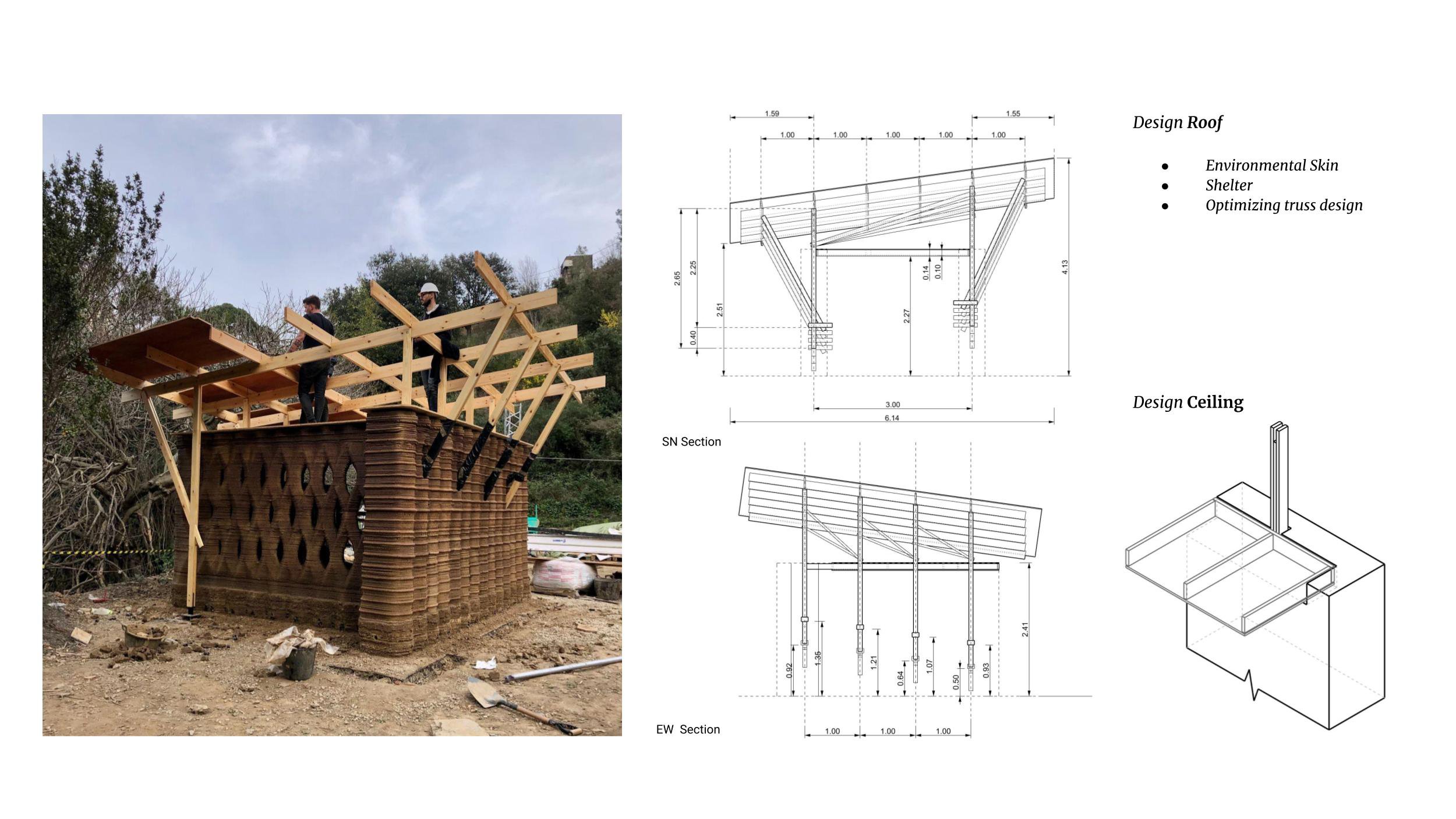
The aim of the roof is to protect from the elements, mainly wind, water, and sun. Overhangs and angles were designed with the site data collected to find the appropriate design. The truss design is highly optimized, with the angled base of the truss having a standardized angle and shape, with the keying in the clay following the designed roof angle. The keys themselves are designed to be sawn to a finish after installation, as part of the finishing process of the interior. With the progressive shrinkage of the clay over time, the connection between the clay and wood becomes stronger after the clay is fully dry.
Protection
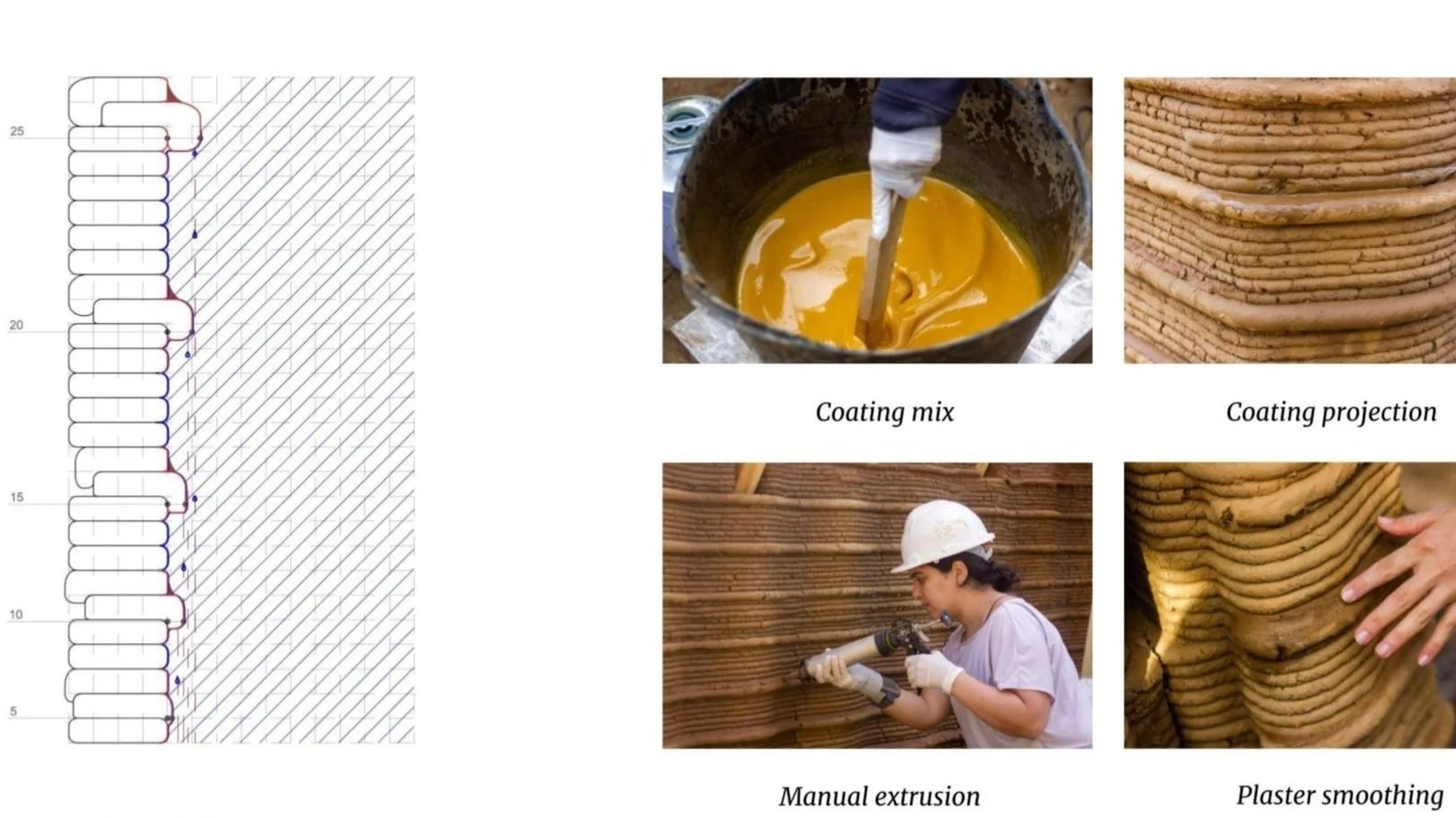
The effects of water on earthen structures are well documented; less research has focused on actually reshaping the design of earthen structures to formulate a proper solution to this problem. 3D printing today, through computational data-driven design explorations, is expanding the boundaries of possibilities in terms of design-led problem-solving in architecture. This research is aimed at a morphological and material exploration around showcasing the opportunities given by 3D printing in solving the complex issue of fulfilling the structural requirements of earthen buildings in the presence of water. In the case of the prototype, both the use of designed infill to increase runoff time and a protective coating were tested and used.